Eau de Parfum vs Perfume Oil: Which Lasts?
A fragrance can arrive before you do, or remain close enough to feel like a private luxury. That is the real difference behind eau de parfum vs perfume oil. One creates a radiant trail with every movement; the other settles into the skin with a rich, intimate warmth. Both can be beautifully long-lasting, especially in the world of oud, amber, musk, rose, and spice. The right choice depends on how you want your signature scent to be experienced.
Eau de Parfum vs Perfume Oil: The Essential Difference
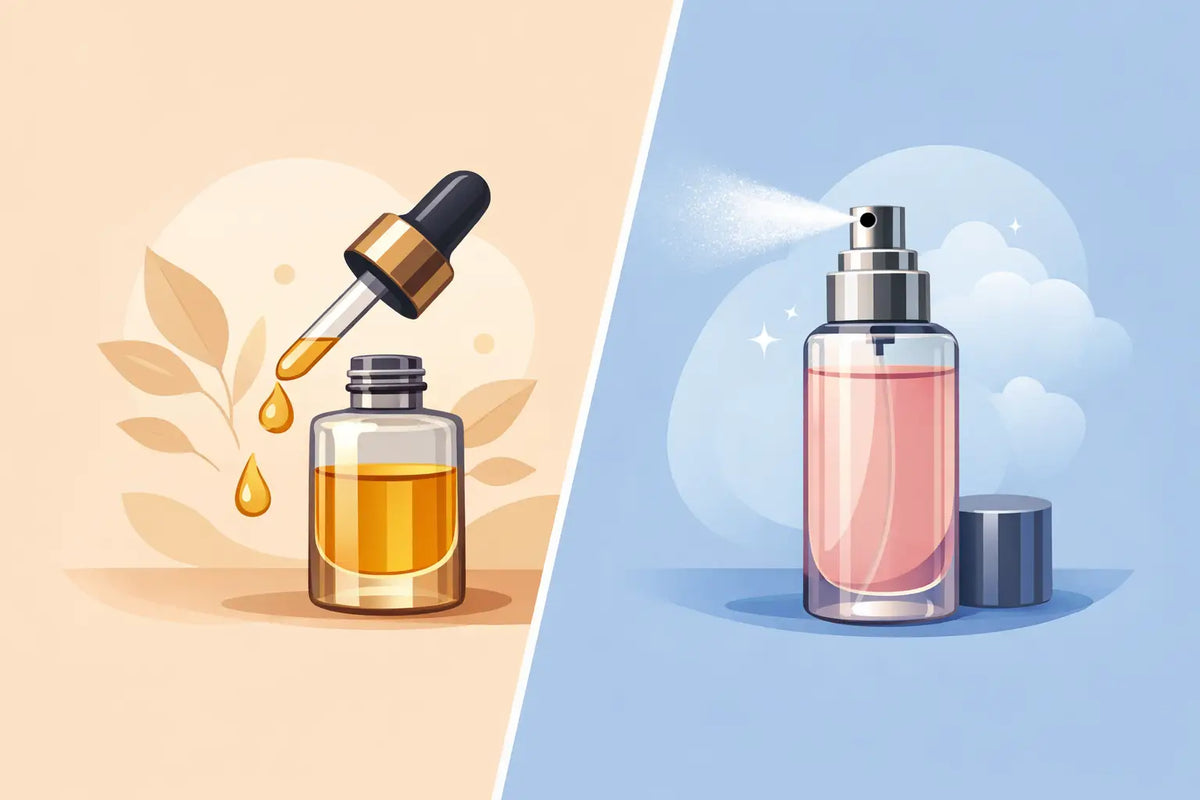
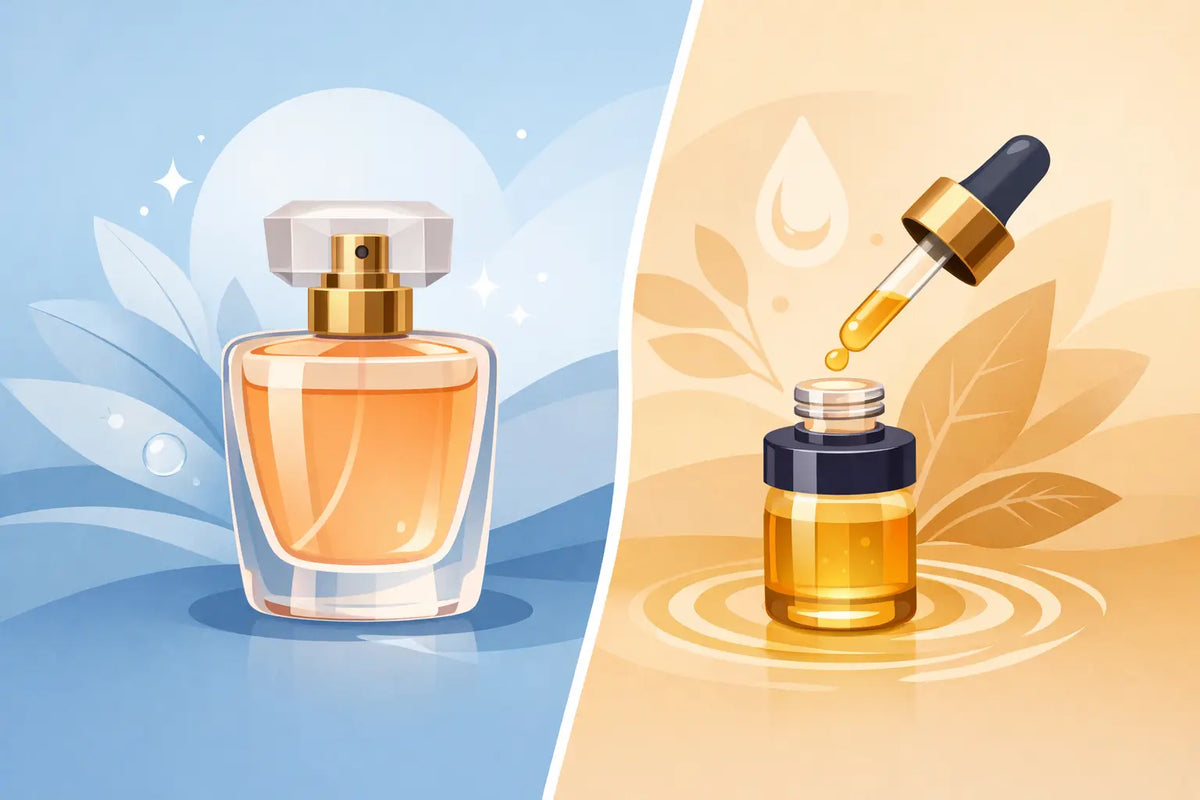
Eau de parfum is usually an alcohol-based fragrance spray with a high concentration of perfume materials, often around 15 to 20 percent, though formulas vary by house. Alcohol helps the scent bloom quickly after application. You notice the opening first - perhaps a bright citrus, a velvet rose, or a spark of saffron - before the deeper notes take their place.
Perfume oil is fragrance blended into an oil base rather than alcohol. It is typically applied with a rollerball, dabber, or dropper directly to pulse points. Since it does not flash off in the same way alcohol does, the scent develops more slowly and stays close to the body. It can feel smoother, creamier, and more personal from the first touch.
Neither format is automatically more luxurious. A well-made eau de parfum can feel commanding and refined, while an expertly blended perfume oil can have the depth and richness of a treasured attar. Think of the choice as presence versus intimacy, not quality versus quality.
Projection: Do You Want a Trail or a Secret?
Projection is the space a fragrance fills around you. Eau de parfum usually has the advantage here. A few sprays on the neck, wrists, and clothing can create noticeable sillage - the delicate scent trail that lingers when you leave the room. This makes eau de parfum especially compelling for evenings out, celebrations, date nights, and any occasion when you want your scent to make an entrance.
The alcohol in an eau de parfum carries aromatic notes into the air more readily, particularly during the first few hours. Lighter notes such as bergamot, apple, lavender, and fruity florals often feel more vivid in spray form. A bold oud or amber eau de parfum can be unforgettable, but it also asks for restraint. Two or three intentional sprays may be all you need.
Perfume oil generally offers softer projection. Someone standing close may notice the warm sweetness of vanilla, the resinous character of amber, or the sensual pull of musk, but it is less likely to fill an elevator or follow you down a hallway. That is not a limitation when discretion is the goal. For work, travel, close conversations, or scent-sensitive spaces, oil can feel impeccably polished.
Which One Lasts Longer on Skin?
The simple answer is that perfume oil often wears longer at close range, while eau de parfum may project more strongly at the beginning. But longevity is never decided by format alone. The formula, your skin, the weather, and the notes themselves all matter.
Rich base notes tend to stay. Oud, sandalwood, patchouli, vanilla, amber, tonka, musk, and resinous accords naturally have more staying power than many sparkling citrus or airy floral notes. An oil built around these materials can become a warm skin scent for eight hours or longer. It may be subtle by the end of the day, yet still present when your wrist meets your nose.
A quality eau de parfum can also last six to ten hours, sometimes longer on fabric and hair. Its opening will usually be more noticeable than an oil's, then it will gradually settle into its base. If you want people to catch your fragrance from across the table, eau de parfum may feel longer-lasting because its presence remains more visible. If you want a scent that stays with you rather than performs for the room, perfume oil may win.
Dry skin can make either format fade faster. Apply fragrance after unscented moisturizer, or use a small amount of matching or neutral body oil first. Hydrated skin gives fragrance something to hold onto, allowing amber, florals, and woods to unfold with more grace.
The Scent Experience on Your Skin
Eau de parfum has movement. Its notes tend to reveal themselves in chapters: a lively opening, a more expressive heart, and a lingering dry-down. This evolution is part of the pleasure. A fragrance that begins with pear and jasmine may become a seductive blend of rose, amber, and soft woods several hours later.
Perfume oil feels more continuous. The transition between notes can be gentler, and the base accords often appear earlier. That makes oils particularly beautiful for dense, opulent profiles. Imagine saffron melting into rose, dark oud softened by vanilla, or clean musk wrapped in warm amber. The result can feel less like a fragrance floating around you and more like an extension of your natural warmth.
Body chemistry also has a more noticeable role with oil. Because it sits so closely on the skin, the same perfume oil can smell slightly sweeter, smokier, or more musky from one person to another. For those who want a truly personal signature, that is part of the appeal.
When Eau de Parfum Is the Better Choice
Choose eau de parfum when you want a fragrance that is expressive from the first spray. It suits social events, dinner reservations, weddings, nights out, and any moment when confidence deserves a little extra reach. It is also the easier option for applying to clothing, where it can leave a beautiful lingering impression. Test first on delicate fabrics, especially silk, because darker oils and richly colored formulas may mark material.
Eau de parfum is often ideal for warmer weather, too. Heat encourages fragrance to travel, so one or two sprays can feel vibrant without becoming heavy. Fresh citrus, aquatic notes, white florals, and clean musks shine in this format. Even deeper Arabian-inspired scents can feel surprisingly airy when balanced with bright top notes.
If you enjoy the ritual of choosing a scent to match the mood of your outfit, eau de parfum delivers that instant transformation. One spray can make a simple black dress feel more magnetic or add an edge of refinement to a crisp shirt.
When Perfume Oil Is the Better Choice
Choose perfume oil when you want depth without excess. It is a natural match for intimate evenings, long workdays, prayer, travel, and moments when you prefer a fragrance to be discovered rather than announced. The compact format also slips easily into a bag for a quiet touch-up.
Oils come into their own in cooler weather. As temperatures drop, a warm blend of oud, amber, sandalwood, vanilla, or musk can feel almost like cashmere on the skin. Because the scent stays close, you can enjoy a lavish profile without worrying that it will overwhelm everyone around you.
Perfume oil is also an excellent choice for layering. A touch of musk oil under a rose eau de parfum can add sensual depth. Amber oil beneath a woody spray can make the dry-down feel richer and longer. Start lightly. The goal is a seamless signature, not competing notes.
Application Makes a Difference
With eau de parfum, spray from several inches away onto pulse points such as the sides of the neck, wrists, and inner elbows. One light spray on clothing can extend wear. Avoid rubbing your wrists together aggressively; let the fragrance settle naturally so its opening retains its intended shape.
With perfume oil, use a small amount. Roll or dab it onto the wrists, behind the ears, inside the elbows, or at the base of the throat. More is not always better, particularly with oud, amber, and concentrated musk blends. Give the oil a few minutes to warm into your skin before deciding whether you need more.
For a refined layered effect, apply perfume oil first, then mist eau de parfum over nearby skin or clothing. Keep the profiles complementary: rose with oud, vanilla with amber, citrus with clean musk, or sandalwood with soft florals. This is where fragrance becomes personal style rather than a routine.
Finding Your Signature Presence
There is no single winner in eau de parfum vs perfume oil because each format creates a different kind of memory. Eau de parfum is for the person who wants to be noticed - polished, luminous, and impossible to forget. Perfume oil is for the person who values a closer kind of allure - warm, composed, and deeply individual.
At Dubai Perfume LA, Arabian-inspired fragrance is about more than strength. It is about choosing the notes and the presence that feel most like you, whether that means a radiant spray of floral amber or a quiet veil of oud oil. Let your setting guide the format, let your skin guide the scent, and let the fragrance you reach for become the detail people remember long after the moment has passed.