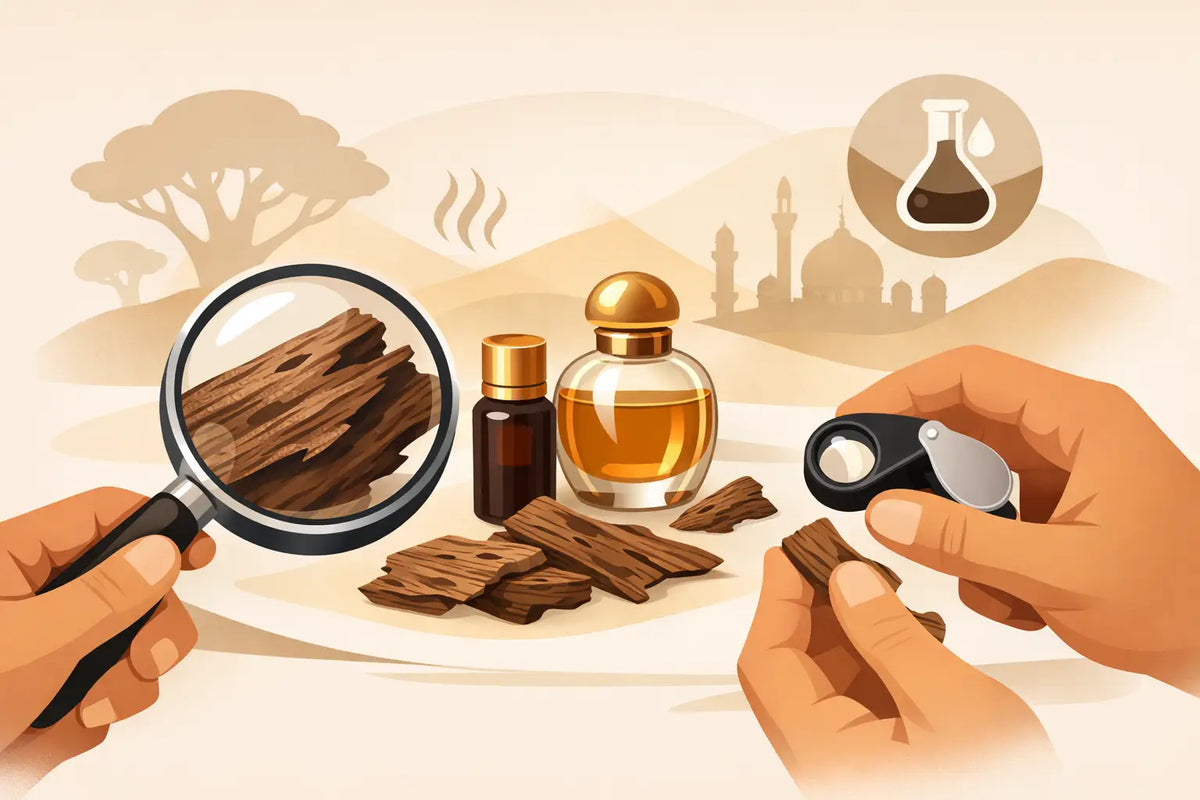
How to Identify Genuine Oud Before You Buy
A bottle labeled oud can promise smoky Arabian luxury, deep woods, and unforgettable presence. But the word oud is used broadly, from precious natural agarwood oil to modern fragrance blends built around an oud-style accord. Knowing how to identify genuine oud helps you shop with confidence, appreciate what you are wearing, and choose a scent that truly earns its place in your collection.
The first distinction matters most: genuine oud and a genuine oud fragrance are not always the same thing. Pure oud oil, also called dehn al oud, is distilled from resinous agarwood. It is rare, complex, and often expensive. An oud perfume may contain natural oud, an oud accord, or a blend of natural and aroma materials designed to create the same dark, luxurious character. Neither approach is automatically better. The right choice depends on whether you want the raw tradition of aged agarwood or a polished, long-lasting signature scent made for everyday wear.
How to Identify Genuine Oud by Its Scent
Real oud does not smell like one simple note. Its character changes from skin to skin and from one origin to another. You may notice damp wood, leather, incense, honey, warm spice, earth, dried fruit, or a subtle animalic depth. Some styles are clean and amber-like; others feel dark, medicinal, smoky, or almost barnyard-rich. That contrast is part of oud’s fascination.
A natural oud oil usually develops slowly. It may open with a sharp, fermented, leathery, or woody edge before revealing softer sweetness and resinous warmth. Give it time. On skin, quality oud tends to evolve in layers rather than staying flat from the first minute to the last.
Be careful with the common assumption that genuine oud must be aggressively smoky or harsh. A loud blast of burnt wood can come from a synthetic accord just as easily as a natural ingredient. Likewise, a smooth, elegant oud perfume can be entirely authentic as a finished fragrance even if it is not a bottle of pure agarwood oil. Scent alone offers clues, not proof.
Know What You Are Actually Buying
Before judging authenticity, look at the product category. A tiny vial of pure oud oil and a 100 ml eau de parfum serve different purposes and should not be priced or evaluated in the same way.
Pure oud oil is generally sold in small quantities because the material is concentrated and costly. It is often dabbed onto pulse points rather than sprayed. The label may identify it as oud oil, agarwood oil, dehn al oud, or a specific regional style. A perfume, on the other hand, will normally list alcohol, fragrance, and other ingredients. It can still deliver a beautiful, authentic Arabian fragrance experience, but it is a composed scent rather than raw distilled oud.
This is where transparent wording separates a confident seller from a questionable one. If a product claims to be pure natural oud but comes in a large bottle at an unusually low price, pause before purchasing. Genuine agarwood is not impossible to find at accessible prices, especially in a blended perfume, but pure oil has a different value structure.
Look for Origin, Extraction, and Aging Details
A trustworthy oud seller should be able to tell you more than that the scent is exotic. Natural agarwood comes from Aquilaria trees, and its aroma can vary according to region, resin content, distillation method, and age. Cambodian, Indian, Thai, Malaysian, and Indonesian ouds can each express different facets, though descriptions are never absolute.
Indian oud is often associated with powerful leathery, animalic, and smoky depth. Cambodian oud may lean sweeter, fruitier, or more balsamic. Thai and Malaysian profiles can feel greener, earthier, or more herbal. These are useful reference points, not rules. Distillation and blending can shift the final profile dramatically.
For pure oils, ask whether the oud was distilled from wild or cultivated agarwood and whether it was aged after distillation. Sustainable cultivated agarwood is not inferior simply because it is cultivated. In fact, responsible sourcing is increasingly essential for protecting these precious trees. What matters is honest disclosure, skilled distillation, and a scent profile that matches the seller’s description.
A seller does not need to reveal every trade secret, but vague claims such as rare royal oud with no origin, concentration, or product detail deserve healthy skepticism. Genuine luxury is specific.
Let the Price Tell Part of the Story
Price is a signal, not a verdict. Real oud is one of perfumery’s most valuable materials because agarwood takes years to form its fragrant resin, and yields can be limited. A pure, aged oil from high-resin material may cost far more than an ordinary perfume bottle.
That does not mean an affordable oud fragrance is fake. Many exceptional Dubai-inspired perfumes use carefully constructed oud accords alongside amber, rose, saffron, sandalwood, vanilla, musk, and woods. These blends make the experience of oud more accessible while creating impressive projection and longevity. They are especially appealing when you want a scent that leaves a refined trail from day into evening.
The concern begins when the pricing and the promise do not match. A seller presenting a full-size bottle as untouched, ultra-rare, pure natural oud at a bargain-basement price is likely relying on marketing rather than material. Look for a fair relationship between the product’s format, concentration, ingredient claim, and cost.
Examine the Bottle, Packaging, and Seller
Presentation can offer useful evidence, although luxury packaging alone is easy to imitate. Check for clean labeling, a batch code or lot number when applicable, secure caps, consistent printing, and product information that matches the listing. Spelling errors, blurry graphics, missing ingredient details, or packaging that feels carelessly assembled should make you cautious.
The seller’s behavior matters even more. Reliable fragrance retailers provide clear photos, accurate scent descriptions, understandable return policies, and realistic performance claims. They do not insist that every oud is identical, because it is not. Natural materials vary, and even a beloved perfume can smell different depending on climate, skin chemistry, and how much you apply.
Customer feedback can help when it describes specific experiences such as longevity, packaging, authenticity checks, or how the scent develops. Generic praise without details is less useful. When possible, buy from a retailer with a visible reputation for curated Arabian fragrances and straightforward service. At Dubai Perfume LA, the focus is on bringing the richness of Dubai-inspired perfumery to fragrance lovers who want distinctive scents without the mystery around what they are purchasing.
Test Oud on Skin, Not Only on Paper
A blotter strip is valuable for the opening, but oud earns its reputation on skin. Apply a small amount and revisit it over several hours. Notice whether the fragrance moves from top notes into a deeper heart and a warm, lingering base. A well-made oud perfume should feel intentional at every stage, even when it is bold.
Try testing in cooler air and again in warmer weather. Heat can amplify oud’s smoky, leathery, and sweet facets, while cool weather often brings out its resinous comfort. If you are new to the note, start with a softer oud rose, oud vanilla, or oud amber blend before stepping into darker, more animalic styles.
Questions Worth Asking Before You Buy
When a product claims to contain genuine oud, ask whether it is pure oud oil or an oud-based perfume, where the material or inspiration comes from, and whether the seller can explain the scent profile clearly. For oil, ask about origin, distillation, and aging. For perfume, ask about concentration, notes, and expected wear.
You do not need a chemistry lab to make a smart choice. You need clear information, realistic expectations, and enough patience to let the fragrance reveal itself. The finest oud is not always the darkest, loudest, or most expensive option. It is the one that feels beautifully made, honestly presented, and unmistakably yours long after the first impression fades.